
Recognise the pattern
When lower-leg symptoms interrupt your activity.
Lower-leg pain or tightness can make you stop or adapt during a walk, a run or your usual activity. Rest may help, and the pattern may change over time. Recurring symptoms deserve an assessment.
Describe your symptoms
The interruption matters.
Recognise the pattern
What CECS can feel like
CECS is often seen in younger, active people, and it can affect older adults too.
A muscle compartment is a group of muscles enclosed by fascia, a firm layer of connective tissue. During activity, working muscles expand and pressure within the compartment changes. In CECS, exercise-related pressure rises are associated with pain and tightness. Professor Lee assesses that response alongside your symptoms and examination.
Chronic exertional compartment syndrome (CECS) can cause exercise-related pain and a feeling of pressure or tightness. Numbness, pins and needles or weakness can also occur. Symptoms may affect one or both lower legs and often improve when the provoking activity stops. The four main compartments are anterior (front), lateral (outer side), superficial posterior (superficial calf) and deep posterior (deeper in the back of the lower leg). One or several may be affected.
NHS: compartment syndrome · Vogels et al. (2022): clinical consensus on lower-leg CECS · de Bruijn et al. (2018): lower-leg CECS in a large referral population · Buerba et al. (2019): CECS management strategies
Inside a muscle compartment
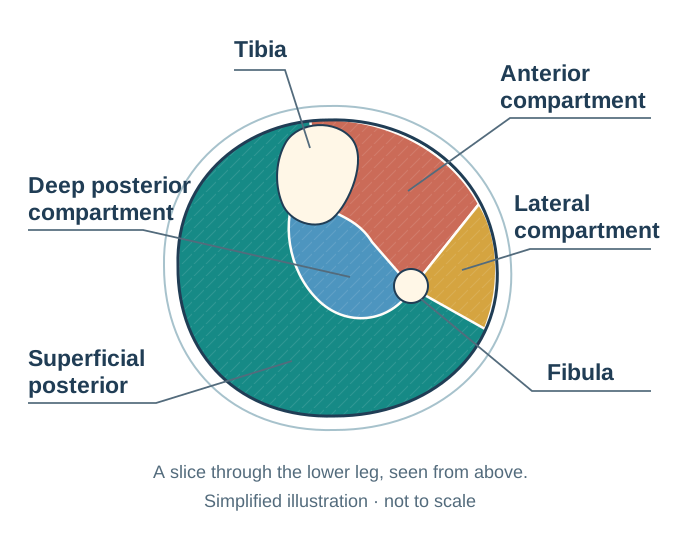
- AnteriorFront of the lower leg
- LateralOuter side of the lower leg
- Superficial posteriorSuperficial calf muscles
- Deep posteriorDeeper within the back of the lower leg
Fascia surrounds the muscle compartment. Professor Lee examines how pressure and symptoms change with activity.
Keep the possibilities open
Similar symptoms, different causes
Shin splints (medial tibial stress syndrome), bone stress injury, nerve entrapment, tendon problems and blood-flow conditions such as popliteal artery entrapment can overlap with this pattern. Relief with rest does not identify the cause by itself.
Brewer and Gregory (2012): differential diagnosis of lower-leg pain
- 01 Muscle compartment pressure
- 02 Shin splints or bone stress injury
- 03 Nerve or tendon problems
- 04 Blood-flow conditions
Professor Lee considers these possibilities alongside your history and examination.
Your account comes first
Make the pattern easier to explain
Note the activity, where symptoms start, how long or far you can go, and what happens after you stop. Include whether your foot feels weak or numb and whether symptoms now affect everyday walking. The questionnaire helps organise these details for a conversation. The forthcoming ExtPress™ app will provide an exercise and pain diary; you can use ordinary notes while it is in development.
What you were doing
The activity and the point when symptoms started.
Where you felt it
Which leg, where, and any weakness or numbness.
How it developed
Time or distance, and the impact on your activity.
What happened next
What changed after stopping, and during everyday walking.
Common questions
Does exercise-related leg pain mean I have CECS?
No. Several conditions can cause it. A clinician needs to assess your symptom pattern and examination, then decide whether tests are useful.
What should I record before an assessment?
Note the activity, symptom location, time or distance to onset, response to rest and effect on your activity. Include previous investigations and treatments.